What a Lanai Screen Enclosure Is
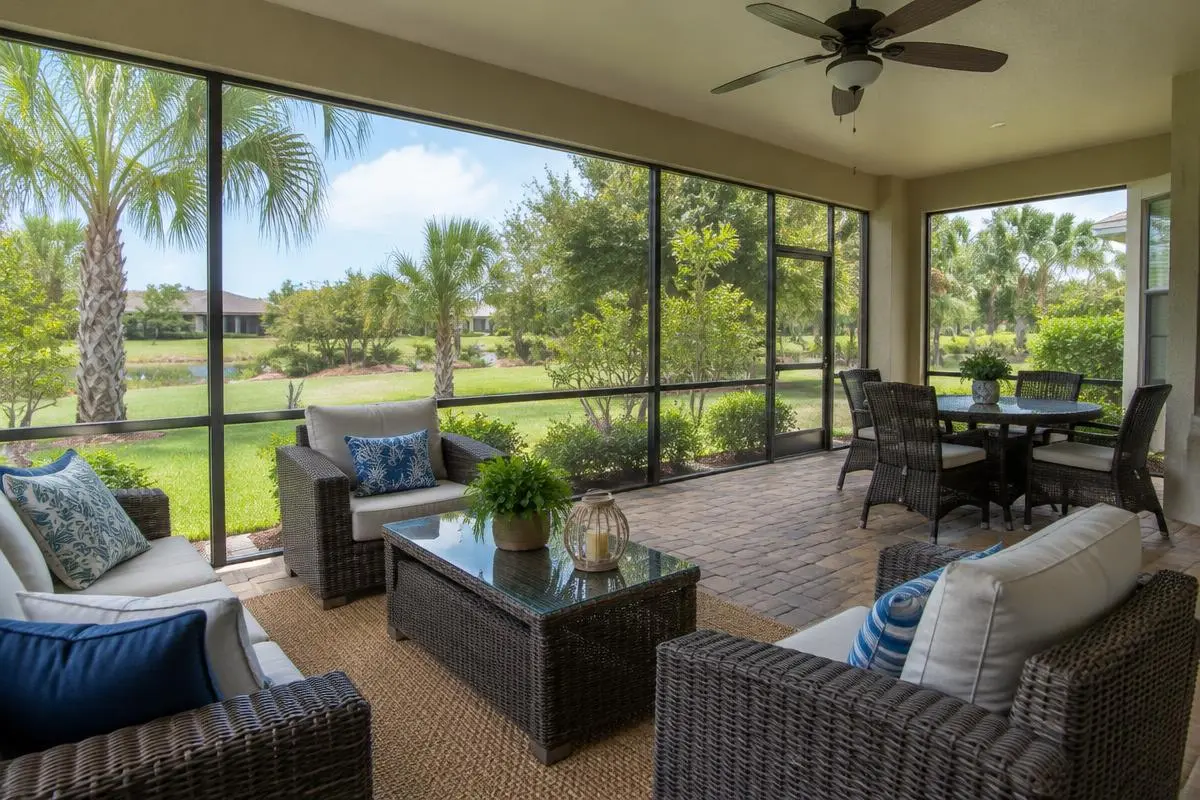
Lanai screening encloses the open sides of a covered outdoor living area with screen panels and appropriate access points. The result is a lanai screen enclosure: the existing roof continues to provide overhead cover, while the screening helps separate the sitting area from surrounding insects and drifting debris. Every lanai has its own arrangement of walls, columns, and openings, so planning a lanai enclosure begins with those details. Furniture placement matters too. A table beside an entrance, a favorite chair facing the yard, or a narrow route to the garden can all influence how a screened lanai should be laid out.
Why Homeowners Screen a Lanai
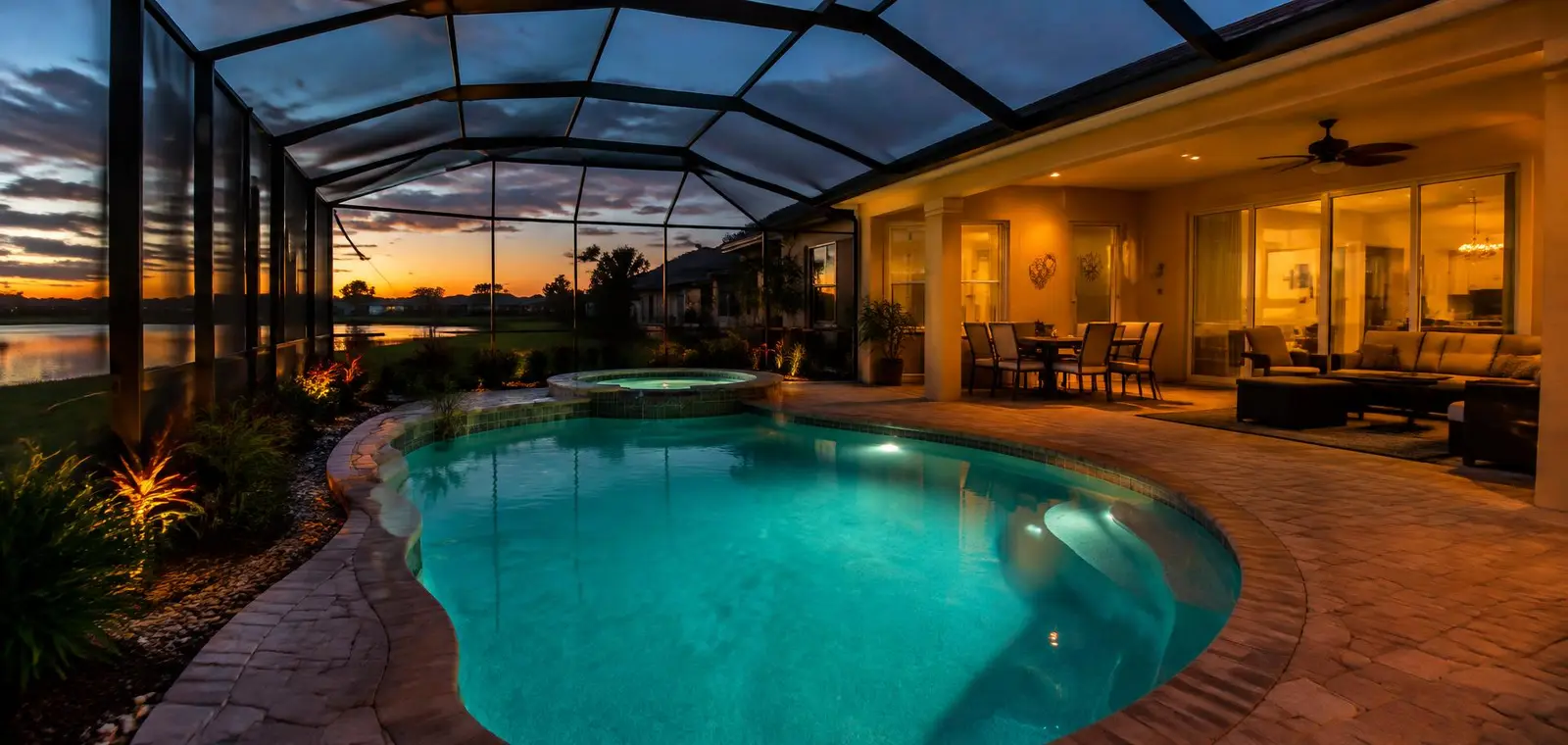
Most homeowners screen a lanai to make a covered space they already have more usable. Screening helps keep insects away from meals and seating, reduces the leaves and debris that blow in from the yard, and still lets air move through the space. A screened lanai can become a place for morning coffee, reading, or dinner outside without constant interruptions. Sometimes a connected pool area has a separate problem that affects the whole outdoor setting. In that situation, discussing pool screen repair can help distinguish damage around the water from the goals for the covered seating area.
Airflow, Views and Insect Protection
A useful lanai screen should support the activities that bring you outside. For some households, airflow across a reading chair matters most; for others, the priority is reducing insect interruptions around a dining table. Screen mesh options can involve tradeoffs in visibility, light, airflow, and insect protection. Greater visual coverage does not necessarily suit every exposure or seating arrangement. Explain which views you want to preserve and where afternoon brightness is uncomfortable, since those details help narrow the screening choices that fit how you use the lanai.
Common Lanai Layouts and Access Points
Lanais take several common forms. Many are attached directly to the home along one or more walls, while others sit under an extension of the main roof with open sides facing the yard. Some open toward a pool or a separate pool enclosure, so the lanai and pool area share an entrance or walking route. The number of open sides determines how much of the lanai is available for screening. Door placement matters as well: a screen door may lead to the yard, the pool deck, a side path, or a driveway. Thinking about where people actually walk in and out helps decide where access points belong and which openings can stay fully screened.