What Privacy Screening Is
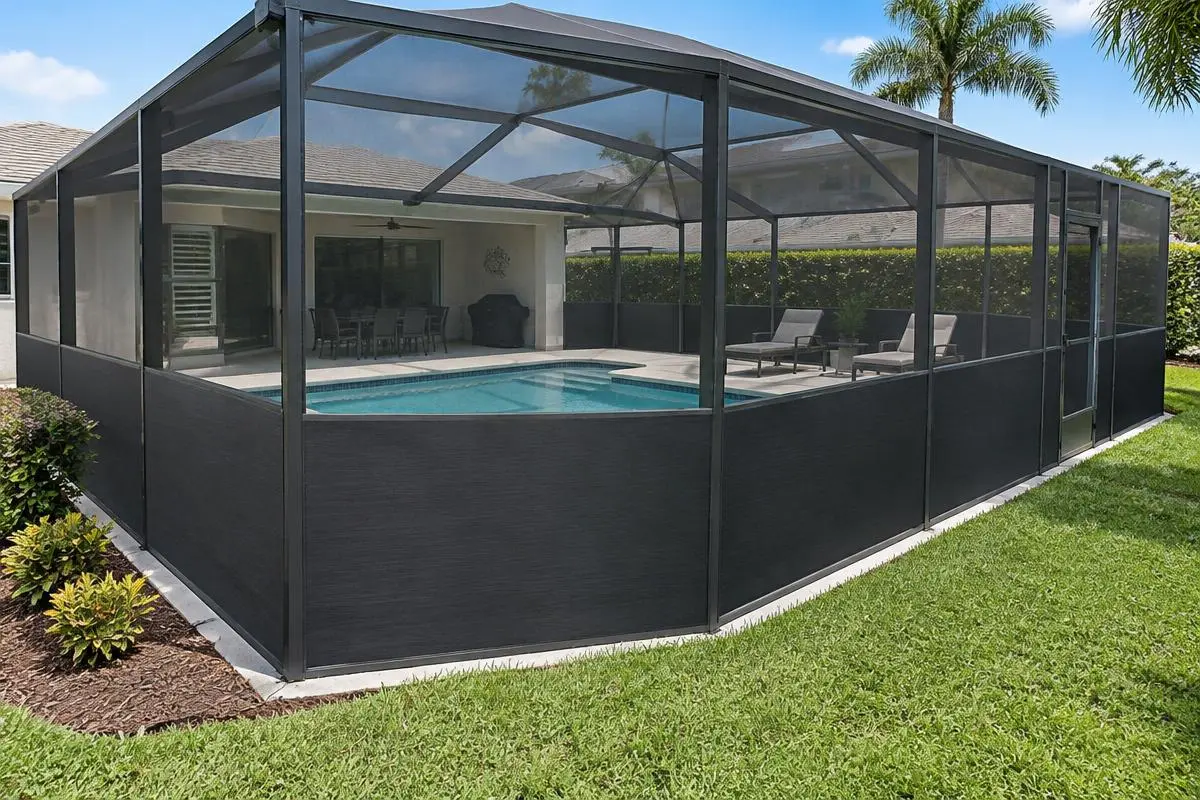
Privacy screening is intended to reduce visibility through selected areas of an outdoor enclosure, while ordinary screening is mainly about screening the space and keeping a more open view. It is not the same as making a space completely hidden. The result depends on screen characteristics, viewing angles, distance, and lighting on both sides. If you are considering a privacy screen for a pool cage, first identify the view that concerns you. A nearby patio, a side window, and a distant street create different sightlines. Knowing where someone would be looking from helps focus the discussion on the relevant panels instead of assuming the entire enclosure needs the same treatment.
If your main concern is insects, debris, airflow or basic enclosure screening rather than sightlines or visibility, ordinary screening may be the better fit.
Privacy Screening and Your Enclosure's Appearance
Privacy screening can change the overall look of an enclosure, since the screened sections read differently from the rest of the cage. Keeping visual consistency in mind helps the enclosure look intentional from inside and out. If the finish of the frame is also part of your concern, pool cage painting is a separate topic from the privacy goal.
Where Privacy Screening Is Used
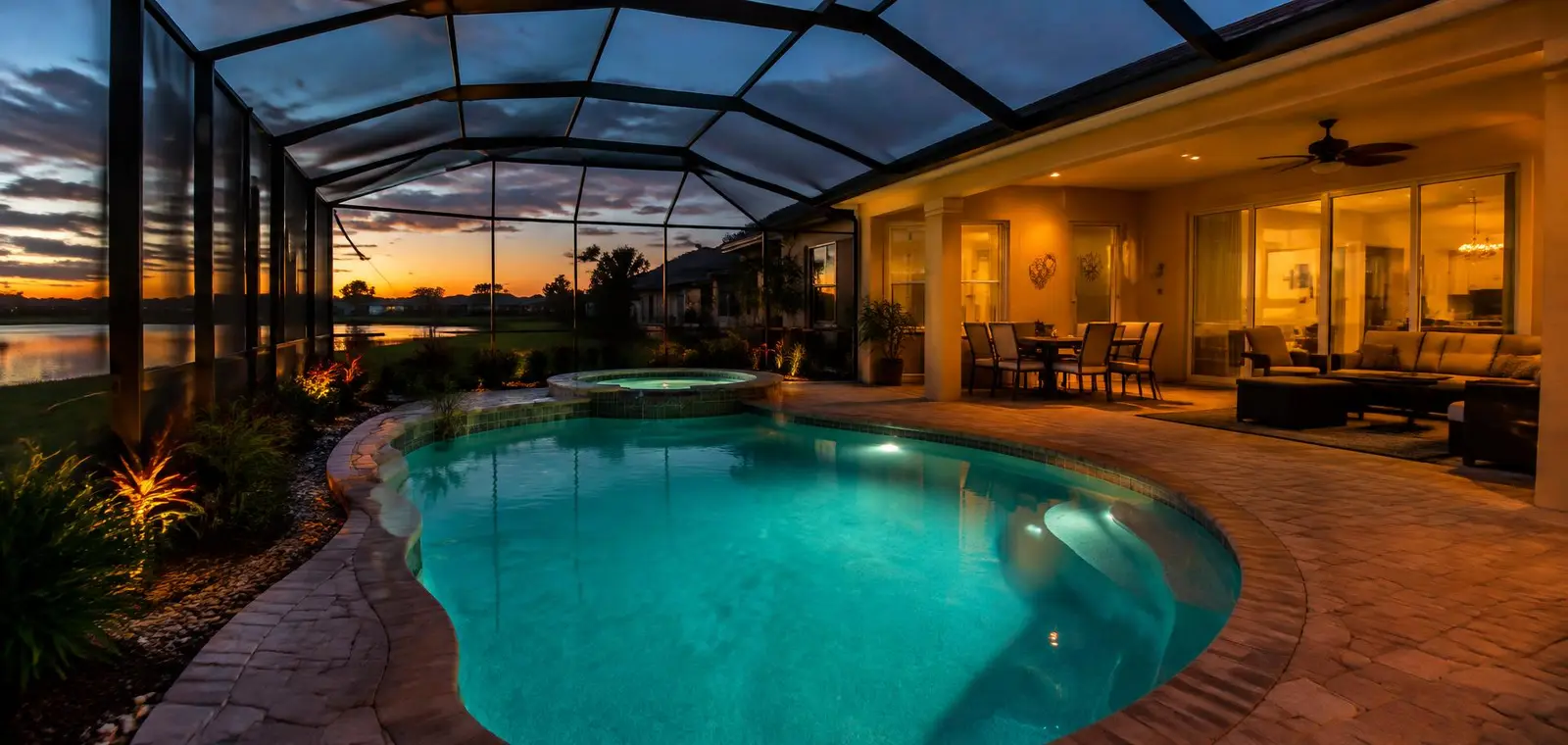
A pool privacy screen may be most useful beside a seating group rather than across every side of the enclosure. On a covered area, a lanai privacy screen might address a particular neighboring window while leaving the garden-facing openings more visually open. Placement should reflect the areas where reduced visibility matters most, although suitability depends on the enclosure and the proposed screen. Think about which views you want to reduce and from which directions they occur, and consider your normal seated position as well as standing views. A screen that appears effective from one angle may look different from another, especially when the surrounding ground levels or distances change.