
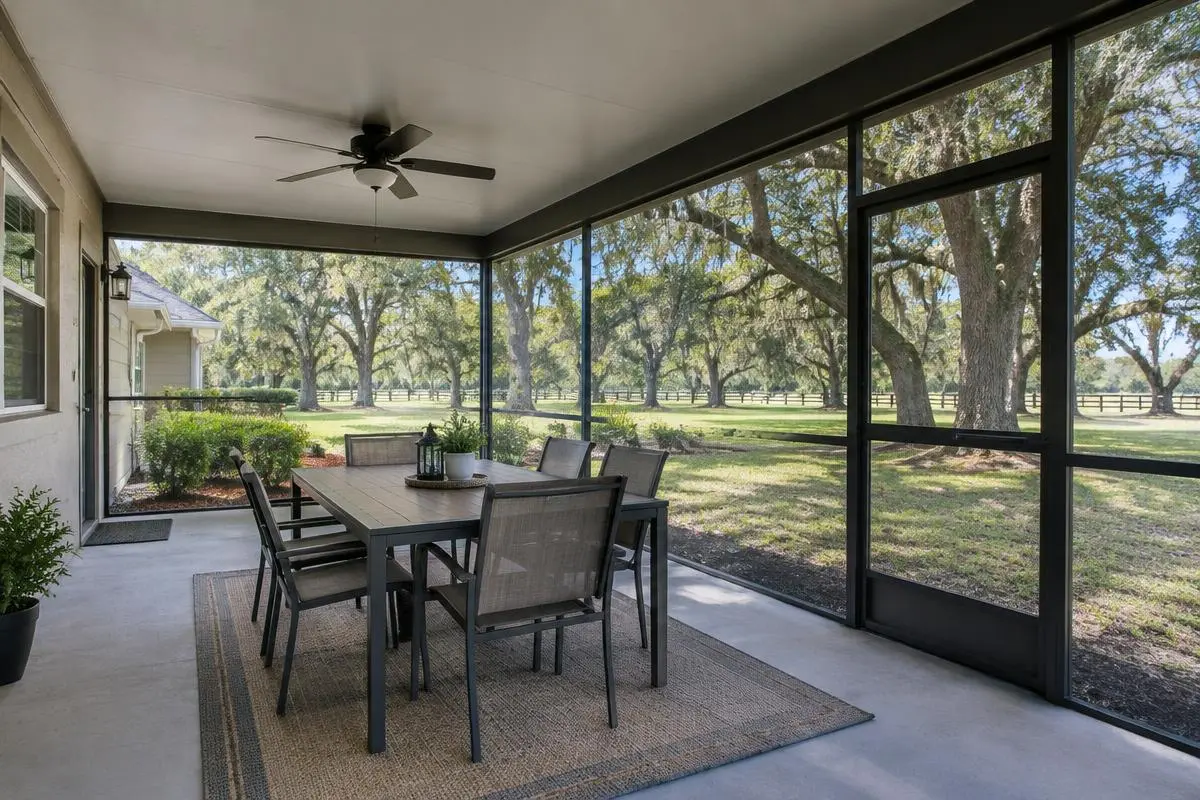
A Long Season for Using the Lanai
Ocala's long warm season gives homeowners many opportunities to spend time outside. A lanai may serve as a breakfast spot on one day and a place to unwind after yardwork on another. Screening can help make that transition between house and yard more practical while maintaining a sense of being outdoors.
The way the space faces matters. Afternoon sun can change where people choose to sit, while a covered section may become the preferred gathering place during warmer parts of the day. Before planning screening, consider the hours you actually use the area and the views you would like to keep.
Summer Showers and Changing Weather
Summer afternoon storms can interrupt outdoor plans quickly. Wind can move leaves and other debris around a property, and rain can enter screened areas. An enclosure is not an indoor room, and ordinary screening should not be understood as weatherproofing or storm protection.
After rough weather, look for visible changes from an accessible position rather than assuming the enclosure is unchanged. New tears, loose-looking sections, or debris caught against the mesh are useful details to describe when requesting help. Avoid climbing onto the cage to investigate a problem.
Live Oaks, Pollen, and Yard Debris
Leafy properties are part of the area's appeal, but nearby live oaks and other trees also influence enclosure upkeep. Leaves, small twigs, and seasonal plant debris can collect around screened spaces. Screening can keep some larger debris outside the seating or pool area, though it does not remove the need for cleaning.
Pollen is a different challenge because fine particles can still reach outdoor surfaces. Furniture, tables, and ledges may need attention even inside an enclosure. Consider where debris tends to accumulate and whether overhanging vegetation contributes to recurring issues when describing maintenance concerns.
Insects and Everyday Comfort
Insects can make an open patio less appealing, especially when you want to sit for a while rather than pass through. Screening provides a boundary, but tears, openings, and frequently used doors can affect how well the area stays separated from the yard.
A small damaged panel may be the main issue, or the mesh may be showing wear in several places. Looking at the enclosure as a whole helps distinguish a focused repair from a broader rescreening conversation. It also keeps attention on how the space functions day to day.
Views, Privacy, and Horse Country Character
Ocala's horse country character contributes to an appreciation for open views, greenery, and time outdoors. Not every property has the same setting, however. One lanai may face a broad yard, while another looks toward a neighboring outdoor area. Screening decisions should reflect those actual surroundings.
Privacy screening can be considered where a particular sightline affects comfort, but it can also change light and outward visibility. Think about the places where you sit, rather than assuming every side needs the same treatment. A selective approach may fit the way the space is used.
Plan Around Your Existing Outdoor Routine
Start with what you want to keep: a familiar view, room for meals, or easy movement between the house and pool. Then identify what interferes with those routines. That practical list can guide a discussion about screening, repair, rescreening, or a larger enclosure project without assuming every outdoor area needs the same solution.